Where to Eat in Gujo Hachiman
We picked these using the same method every time: 4.1+ rating, 50+ reviews minimum (a couple of genuine standouts with fewer reviews are noted separately), then we actually read the recent reviews looking for real signals — English menus, cash-only warnings, reservation requirements — rather than guessing. Here’s what that turned up, organized by how much English you can expect, not by cuisine.
If you want an English menu, start here
Traditional Hotplate Cuisine – Izumisaka — Some English. Multiple recent reviews independently confirm an English menu is available. Known for Hida beef and local chicken dishes, teppan-style. Tatami and table seating.
Daihachi — Some English. English menu confirmed by reviewers, known for ayu (river fish) and Hida beef. One honest catch: it’s cash only, and reviewers specifically flag bringing enough.
Shinbashitei — Some English. “Easy to order using the English menu,” per more than one review — also river-view seating. Also cash only, so don’t show up planning to tap a card.
糀CAFE (Koji Cafe) — Beginner-friendly. The owner is repeatedly described as speaking strong English and is genuinely warm with visitors — multiple reviews mention free cookies with coffee. This is probably the easiest first stop in town if you want zero language stress. If you’re at all nervous about ordering food in Japan, I’d start here before trying anywhere else on this list — it takes the pressure off, and you can build up to the cash-only, Japanese-menu places once you’ve got your bearings.
Bistro Reijiro — Some English. A tiny European-Japanese fusion spot (only a handful of seats), the chef speaks enough English to get by. Reservation strongly recommended — walk-ins have been turned away.
Worth it even without English
翔太のうどん (Shota’s Udon) — Japanese only — bring a translation app. This is the most-reviewed restaurant in town by a wide margin, and for good reason: fresh-made udon with a genuine queue culture. No English signals in current reviews, but the family running it is consistently described as warm toward foreign visitors even across a language gap. Open for lunch (11:00–13:45) Monday, Thursday, Friday, Saturday, and Sunday; closed Tuesday and Wednesday. Worth knowing: Saturday is the one day with a dinner service too (17:00–18:30) — every other day is lunch-only.
Nikubare Hachikuma — Japanese only. This one matters beyond the food: keichanyaki is a genuine Gujo regional specialty, not something you’ll find everywhere in Japan. Worth seeking out specifically for that reason, language barrier or not.
RAVI — Some English, more about attitude than vocabulary. A small French restaurant with local ingredients that’s earned a near-perfect rating. One review specifically mentions visiting with only basic Japanese in their group and being warmly accommodated regardless. Reservation needed; closed Wednesdays.
A few places I’ve actually eaten at myself
Everything above came from the verification method described in our editorial principles — ratings and reviews we checked, not places we’ve personally visited. These three are different: I’ve actually eaten at all of them. All three happen to clear our rating bar too, but that’s not really the point — I’d include them either way, because an actual visit is worth more than a number on a screen.
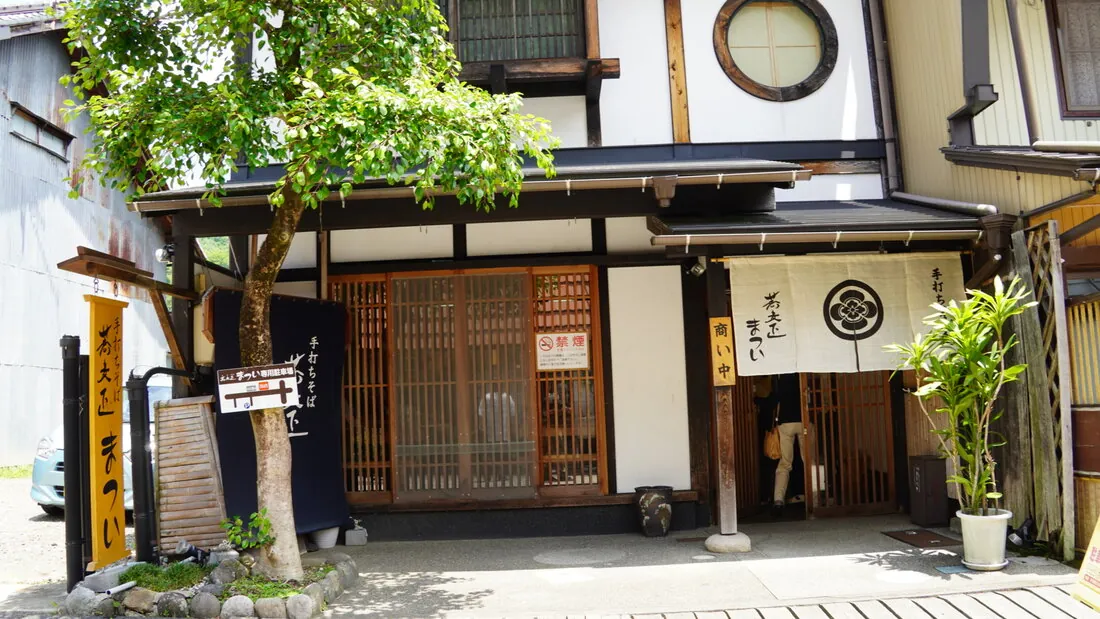
蕎麦正まつい (Soba Shomatsui) — 4.2 rating with over 600 reviews. Located right in the old craftsmen’s quarter covered in our walking guide, this is excellent soba with real wasabi you grate yourself at the table.
Local tip: it gets busy at peak lunch, and the kitchen can run out of noodles before closing time — I go a little earlier or later than the lunch rush to dodge both the queue and the sold-out risk.
Gujo Tonkotsu Ramen Kanmina (Gujo Hachiman branch) — 4.4, clears our bar easily. Tonkotsu-style broth, good gyoza on the side. Closed Tuesdays.
Bishnu Devi — the same family-run Indian restaurant mentioned in our access guide, near the Gujo Hachiman IC bus stop rather than in the old town proper. Genuinely good naan and curry. One thing worth knowing: it sits outside the main old-town cluster, so it makes more sense if you’re already passing that way (arriving via the IC, for instance) than as a special trip from the castle town center.
We’ll keep adding to this section slowly as more first-hand visits happen. It’ll grow a lot slower than the list above, but it’s the part of this article I’m most confident in.
Good to know before you pick a place
Warning: the town effectively closes between lunch and dinner. Most restaurants here run roughly 11am–2pm, then re-open around 5pm — wander out at 3pm expecting to grab a bite and you’ll find closed doors. Plan your meal times around this gap, not around what you’d expect in a city.
- Cash-only is common, even at well-reviewed places. Several of the restaurants above were independently flagged as cash-only by recent reviewers. Don’t assume a card will work; assume the opposite and be pleasantly surprised.
- Vegetarian options exist but aren’t obvious. mi.kimama, a small cafe-restaurant, stands out specifically for genuinely good vegetarian dishes — reviewers who are usually disappointed by vegetarian options in Japan call this one out as an exception.
- The station house cafe doubles as informal tourist help. The small cafe attached to Gujo Hachiman Station has handled things like calling a bus company directly to book seats for confused travelers — worth knowing if you need help beyond just a meal.
- The most photogenic dessert spot (Sogi-an, the riverside tatami tea house) gets genuinely busy by mid-afternoon. If you want a seat without waiting, aim for right after opening.
Last verified: July 2026, based on current Google Maps ratings and recent review content. Restaurant hours, cash/card policies, and English menu availability can all change — if something here turns out to be wrong by the time you visit, we’d genuinely like to know, not just quietly leave it incorrect.
Pairs well with our walking guide to Gujo Hachiman if you’re planning where to eat around your sightseeing route.