Gujo Odori: How to Join Japan’s 30-Night Bon Dance Festival
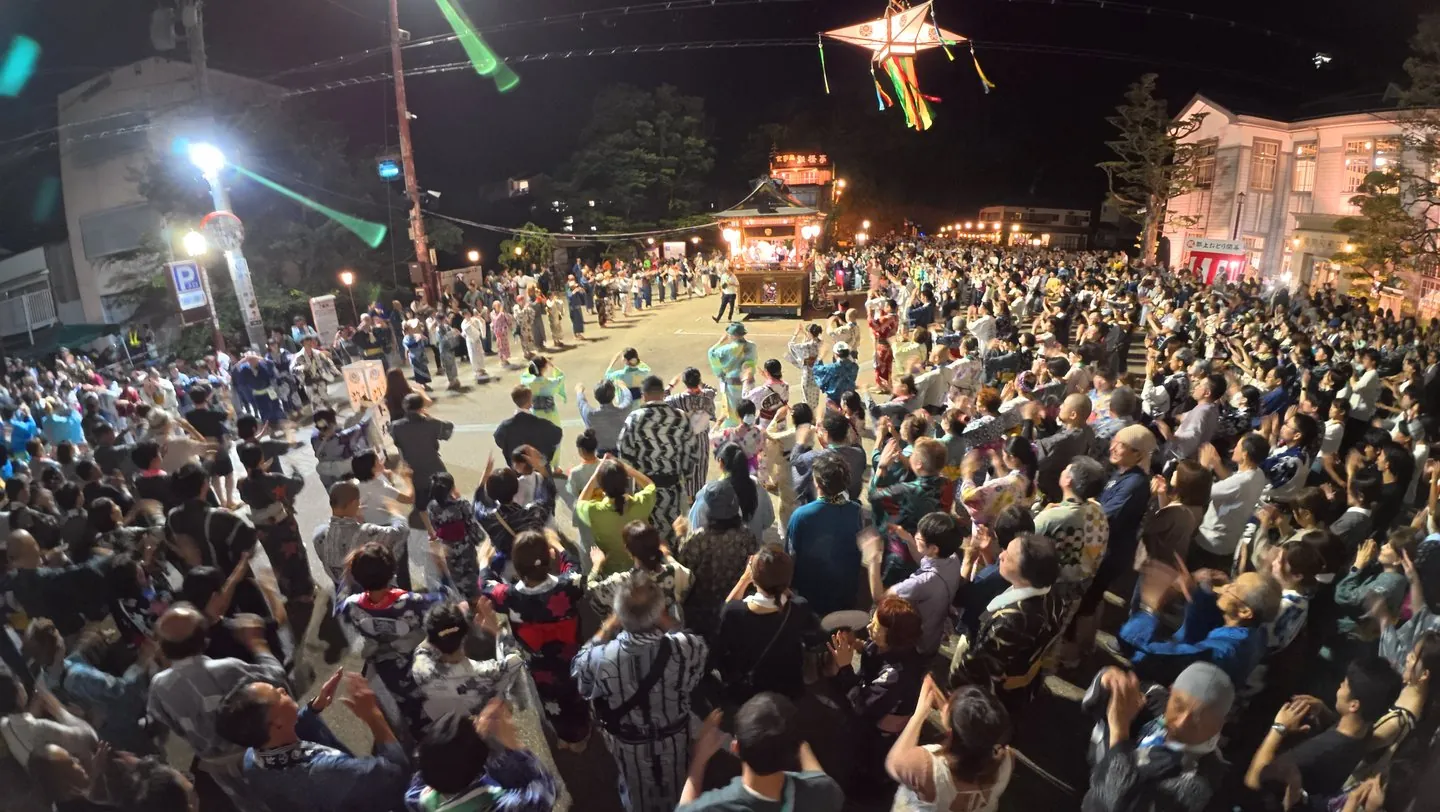
Most Japanese festivals are something you watch. Gujo Odori is something you do. For over 400 years, on around 30 nights each summer, the streets of Gujo Hachiman fill with people dancing in a slow circle around a wooden float of live musicians — locals, visitors, kids, dancers in their eighties, people in yukata and people in sneakers. Nobody checks whether you know the steps. In 2022 it was added to UNESCO’s Intangible Cultural Heritage list, but it hasn’t been turned into a stage show: it’s still a town dancing in its own streets, and you’re genuinely welcome to join.
This guide covers the 2026 dates, how to actually take part without embarrassing yourself, what to wear, and the one practical trap — getting home at night — that catches more visitors than anything else.
What opening night actually felt like
I went to the July 11, 2026 opening night, and a few things stood out that I didn’t fully expect even having been to Gujo Odori before.
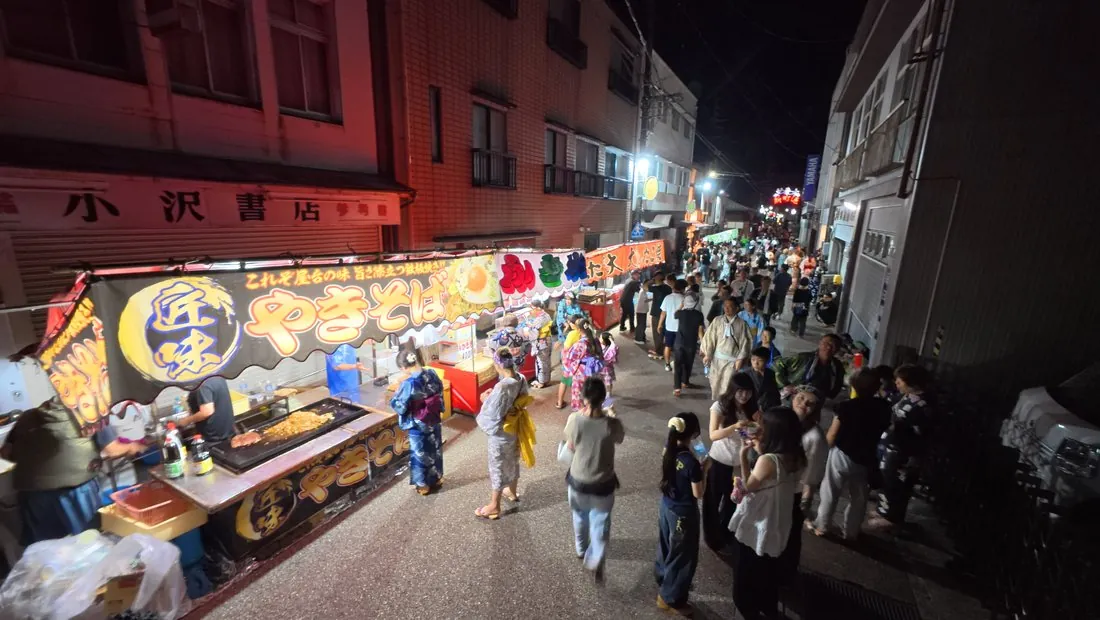
The parking lots near the venue were already full by the time I arrived, so I parked further out and rode a bike in — about 7–8 minutes. That ride in was honestly part of the experience: the closer I got, the more people I passed wearing yukata and geta, and there’s a real build of anticipation watching that happen, like the whole town is visibly converging on the same place. Well before you can see the venue, you can tell something is happening.
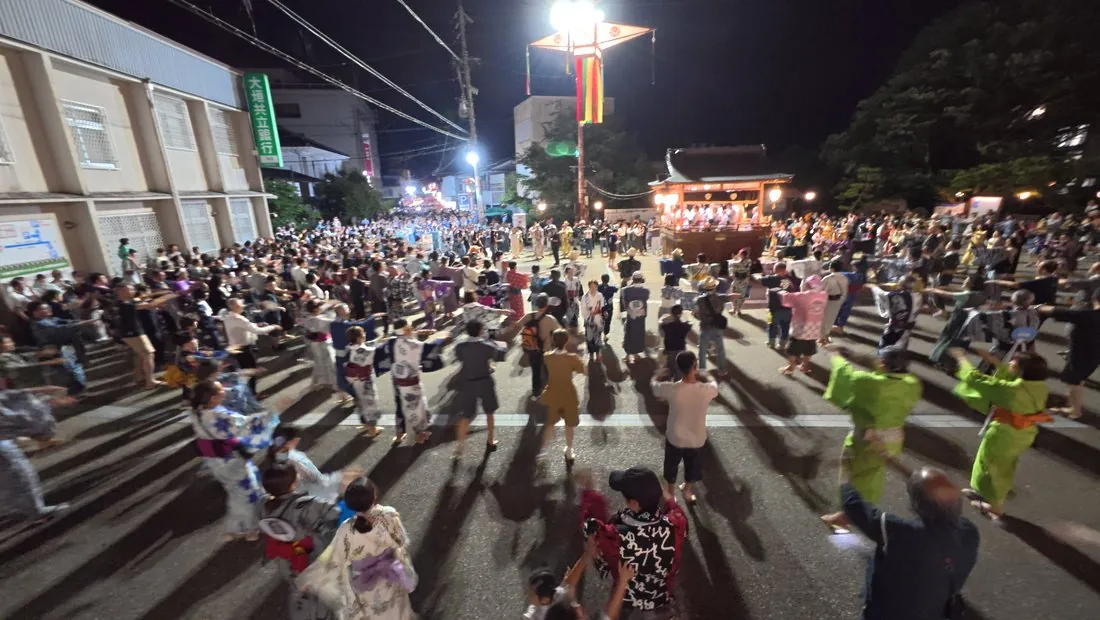
There’s real traffic control on dance nights — roads leading into the venue area are closed to vehicles, not just around the dance circle itself. Once you’re close enough to hear the festival music, the crowd is genuinely dense: the dance circle isn’t one ring, it’s several rings deep, everyone hearing the same song and dancing the same steps at once. It’s overwhelming in a good way the first time you’re in the middle of it. The yakata float sits in front of the old town hall (Kinenkan) building, with the singers and musicians performing live inside it, and the whole crowd dances in a large circle around that — it really does feel like Japan’s original live music format, just with the audience dancing instead of standing still.
Honest take on who’s actually there: I expected an older crowd, and there were plenty of older dancers, but there were also a lot of families with young kids, and a genuine share of people in their teens and twenties. It’s not a festival that’s aging out — all generations show up for it. Foreign visitors, by contrast, are rare — my rough impression was something like 1–2% of the crowd, noticeably fewer than what you’ll see in Takayama. The few I did see were sometimes in yukata, geta clacking along with everyone else, and it was a genuinely nice thing to see.
How beginners actually behave: the “watch from the outside first” advice below isn’t just polite theory — it’s what people actually do. First-timers hang back at the outer edge of the circle, watch the people ahead of them for a while, and only step in properly once they’ve picked up the pattern. Nobody rushes it, and nobody seems to mind newcomers taking their time to join.
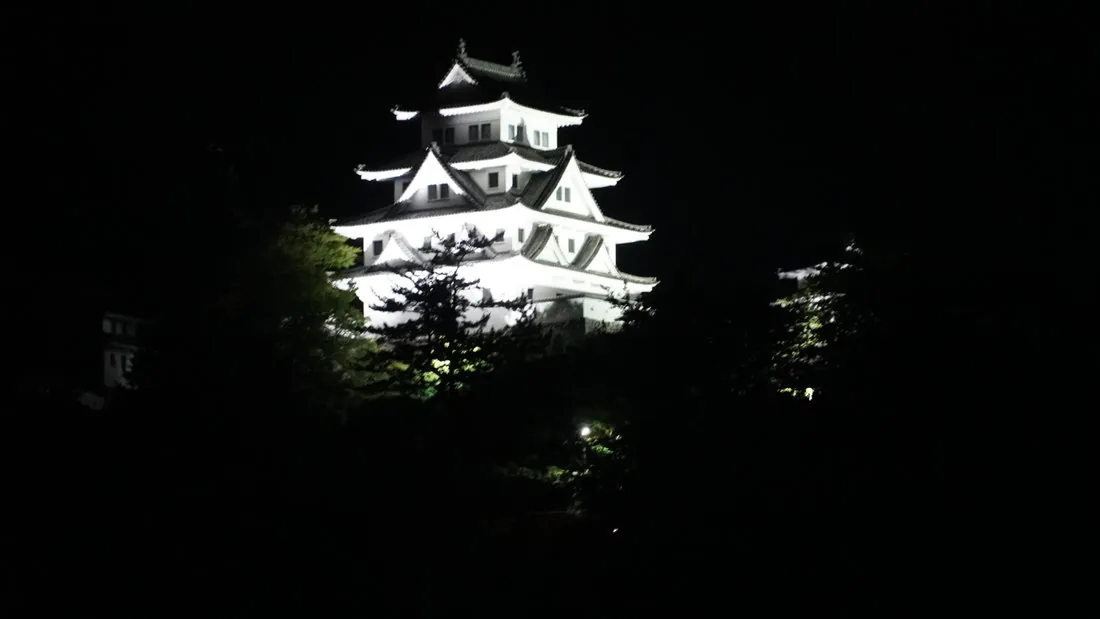
What Gujo Odori actually is
The festival dates back over 400 years to the Edo period, when the local lord encouraged townspeople of all classes to dance together — and that leveling spirit is still the point. There are ten dances, each with its own song, performed live (shamisen, flute, taiko drums, singers) from a small float called a yakata in the middle of the dancing circle. The best-known dance is “Kawasaki”; the night always ends with “Matsusaka,” a slow unaccompanied song where dancers call back “korai, korai” to thank the musicians.
Dancers move clockwise in a big loop around the float (one dance, “Gen Gen Bara Bara,” runs counterclockwise — you’ll notice when everyone turns around). Experienced dancers drift toward the middle; beginners naturally stay toward the outside edge. The steps are repetitive on purpose — most people pick up the basic dances within a couple of songs just by copying the person in front of them.
One thing to be clear about up front: this is not a spectator event with a performance to watch from the sidelines. There are no stands, no stage, and honestly not much to see if you don’t join in. If you come, come to dance.
Gujo Odori 2026: dates and times
The 2026 season runs from Saturday, July 11 to Saturday, September 5 — around 30 nights of dancing spread across that period (not every night; see the official schedule for exact dates).
| When | Dancing hours |
|---|---|
| Weekdays & Sundays | 8:00 p.m. – 10:30 p.m. |
| Saturdays | 8:00 p.m. – 11:00 p.m. |
| Tetsuya Odori (Aug 13 & 16) | 8:00 p.m. – 4:00 a.m. |
| Tetsuya Odori (Aug 14 & 15) | 8:00 p.m. – 5:00 a.m. |
Key nights in 2026:
- July 11 (Sat) — opening night (Odori Hassho-sai) in front of the Kinenkan (the former town hall memorial hall building), with a dance procession from around 7:20 p.m.
- August 13–16 — the four all-night Tetsuya Odori nights during Obon, the famous “dance until dawn” dates. Crowds on these nights can exceed 30,000 people.
- September 5 (Sat) — closing night (Odori-osame), with a lantern procession seeing off the yakata float from around 11 p.m.
Dancing happens rain or shine — only typhoon-level weather cancels it.
Honest take: the official English-language schedule pages are not reliably updated — at the time of writing, one still showed a years-old calendar. The Japanese-language schedule from the tourism association is the source to trust (or ask at the tourist information center in town). We’ll keep the dates on this page current, but for exact night-by-night venues, double-check locally rather than trusting any English site blindly, including this one.
The venue changes every night
There is no single festival ground. Each dance night is tied to a different neighborhood’s shrine or temple festival, so the location rotates through the old town — one night in front of the Kinenkan, another by the station, another along Honmachi, and so on. The tetsuya nights center on the Shinmachi–Hashimoto-cho streets (and Honmachi on the final night).
In practice this is less confusing than it sounds: the town is compact, and on a dance night you can follow the sound and the crowds.
Confirmed (2026-07-11): don’t expect posted venue maps, English signage, or directional signs pointing you there — on opening night, there wasn’t any. In practice you don’t need it: roads leading into the venue are closed to cars on dance nights, and once you’re a few streets away you can hear the music and see the crowd heading the same direction. Follow that, not a map.
How to join the dancing (yes, you, with zero experience)
Everyone is welcome to step into the circle, and this isn’t polite brochure language — locals will genuinely gesture you in and show you the moves. The realistic way to start:
- Watch one full song from the edge to get the pattern.
- Join at the outer edge of the circle, behind someone who clearly knows what they’re doing.
- Copy their hands first, feet second. Being half a beat behind is completely normal and nobody cares.
- Sit out the fast dances at first — the pace varies song to song, and there’s no rule that you must dance every one. Plenty of people drift in and out all evening.
If you want a head start, the Hakurankan museum in town runs short daily dance demonstrations/lessons (needs verification: current times and admission — previously listed as several 15-minute sessions daily, around ¥520 for adults).
Each night, festival judges quietly award dance certificates (menkyojo) to a handful of dancers with exceptional technique. You almost certainly won’t get one on your first night — but it’s a nice thing to know is happening around you. On opening night specifically, I didn’t see anyone actually receive one in public — this may be more of an Obon/tetsuya-nights thing, or just something that happens quietly rather than as a visible ceremony; treat the “watch for it” framing here as unconfirmed rather than something you’re likely to witness.
What to wear, and yukata rental
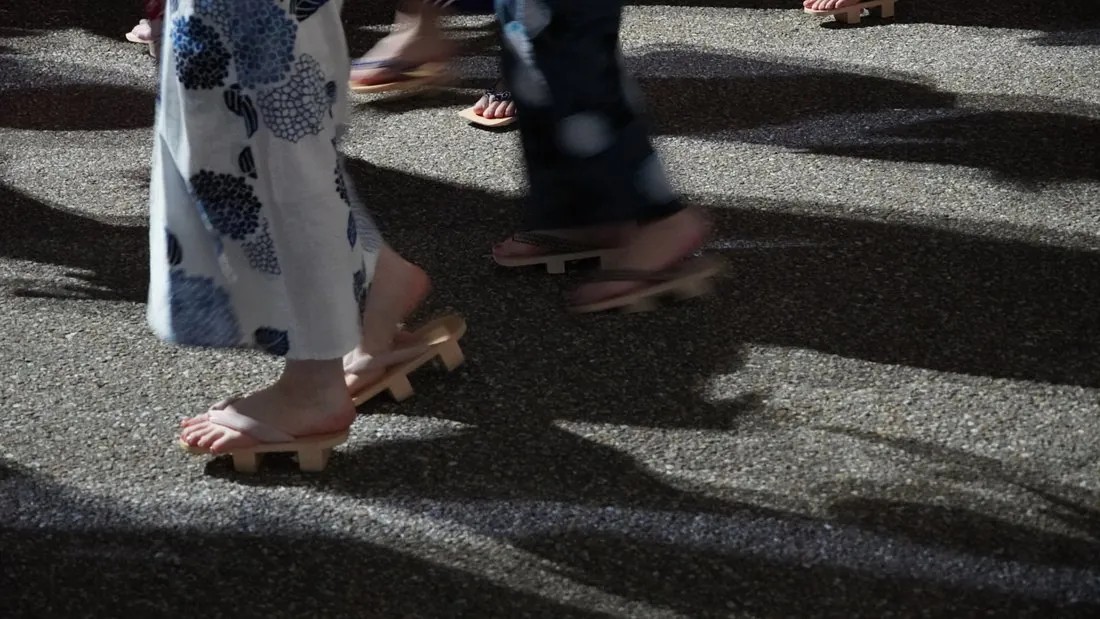
You do not need special clothing. Jeans, a T-shirt, and comfortable shoes are completely acceptable, and on any given night a good share of the circle is dressed exactly like that. That said, dancing in a cotton yukata with geta sandals is part of the experience for many people, and Gujo’s fabric shops take real pride in odori yukata.
- Many ryokan and minshuku provide yukata you can wear out to the dancing — ask when you check in.
- Three confirmed rental shops in town for the 2026 season:
| Shop | Price (from) | Includes | Reservation | Obon (Aug 13–16) |
|---|---|---|---|---|
| Kamiiwa Gofukuten (紙岩呉服店) | ¥4,000 | Yukata, geta, hair accessories, dressing | Not required | Open daily (closed Thursdays otherwise) |
| Kitsuke-dokoro Ruuten (きつけ処るうてん) | ¥5,500 | Yukata, dressing | Required | Open daily |
| tsuyu — 3rd generation Ishiyama (tsuyu3代目石山) | ¥4,400 | Yukata, dressing | Required | Open daily |
Kamiiwa is the only one of the three that doesn’t require a reservation and is normally closed on Thursdays outside the festival’s Obon stretch — worth knowing if you’re deciding last-minute versus planning ahead.
- If you plan to dance a lot, sturdy comfortable footwear matters more than looking the part — several hours of dancing on asphalt in brand-new geta is a blister factory. Locals often reinforce their geta; you’re allowed to just wear sneakers.
Tetsuya Odori: the all-night dances (August 13–16)
The four Obon nights are the festival’s famous peak — dancing from 8 p.m. until 4 or 5 a.m., with tens of thousands of people packing the central streets. It’s the version of Gujo Odori you’ve seen photos of, and for dance-lovers it’s genuinely one of Japan’s great festival experiences.
It is also, honestly, the hardest version to do as a casual visitor:
- Accommodation in town sells out far in advance — think months, not weeks. See our guide to staying in Gujo Hachiman and book early, or accept staying outside town with a transport plan for getting back (see below).
- The crowds are real. 30,000+ people in a small castle town’s streets. If crowds drain you, the quieter mid-week nights in late July or late August are the same festival with room to breathe.
- You don’t have to last until dawn. Plenty of people dance a few hours and go to bed. Dancing until sunrise is memorable; it is not an entry requirement.
If I only had one night to give this festival, I’d still pick a quieter mid-week night over a tetsuya night — the dancing itself is exactly the same, and you actually get to enjoy it instead of just enduring the crowd for bragging rights.
Local manners: welcomed guests, not a theme park
Participation is open, but this is a living tradition in a residential town, with real rules:
- The circle is for dancing. Don’t stand inside it to film, and don’t walk through it. Shoot from the edges.
- Respect the yakata. The musicians and singers of the Preservation Society are the heart of the night — don’t climb near the float or use flash photography at close range.
- Drinking: bars and restaurants are open on dance nights and taking a break for a drink is normal, but dancing visibly drunk in the circle is not the local style. This is a bon dance with a devotional origin, not a street party — pace yourself accordingly, especially on tetsuya nights.
- Residential streets: people live directly on the dance route. Keep noise down when you leave (especially at 4 a.m. after tetsuya), don’t sit on private steps, and don’t treat house entrances as photo backdrops — the same courtesy covered in our first-time visitors guide.
- Photography of people: dancers generally expect to be seen, but close-up shots of individual people (especially children) deserve the same restraint here as anywhere.
The practical stuff nobody tells you
- Cash. Food stalls, small shops, and most yukata rental places are cash-first (some cash-only). ATMs that take foreign cards are limited to the post office and convenience stores, and lines get long on big nights. Get cash out during the day, not at 9 p.m.
- Heat. This is midsummer in a valley town — evenings often stay near or above 25°C with high humidity, and you’ll be dancing. Bring water; vending machines exist but sell out on the biggest nights.
- Toilets. The Kinenkan (the old town hall building the yakata float sits in front of) stays open through dance nights, and its toilets are usable. There are also public toilets at Jokamachi Plaza — available 24 hours — and by the Igawa Komichi entrance. Go before the dancing peaks; lines build on the biggest nights.
- Luggage and lockers. Jokamachi Plaza (the bus terminal in the town center) has coin lockers — the practical place to stash a daypack before the dancing. One honest caveat: they can fill up on holiday weekends and the biggest festival nights, so don’t count on finding a free one late in the day.
- Food. There were festival food stalls on opening night — takoyaki and yakisoba were both there, cash only, the way most festival stalls in Japan work. Don’t count on it being a full night market, though; it’s a modest handful of stalls, not a big food-stall street. If you want a proper meal, it’s still mostly a restaurants-in-town situation, so eat before you come or plan around a place that stays open through dancing hours. The honest overall picture: late-opening restaurants in town are genuinely few, but through the festival season the stalls cover the gap — between an early dinner and the stalls, you won’t go hungry on a dance night.
- If it rains: dancing continues in ordinary rain. Bring a poncho rather than an umbrella — an open umbrella in a packed dance circle makes you the problem.
Getting there — and the trap: getting back at night
Getting to Gujo Hachiman is straightforward and covered in our access guide. Getting away at 10:30 p.m. is where visitors get stuck, and we’d rather over-warn you than have you learn this at a dark bus stop.
The honest picture:
- This is a small town where public transport winds down in the evening. Dancing ends at 10:30 or 11 p.m. Do not assume there is a train or bus after that — on many nights there effectively isn’t. (needs verification: exact last Nagaragawa Railway departure from Gujo Hachiman Station and last highway bus times on dance nights, 2026 timetable)
- Parking near the venue fills up. On opening night, the lots close to the dance venue were full well before dancing started. If you’re driving, plan on parking further out and walking or cycling in — which, honestly, isn’t a bad thing: you’ll pass more and more people in yukata and geta as you approach, and it builds some real anticipation before you even arrive.
- Tetsuya Odori is the partial exception: in past years the Nagaragawa Railway has run special late-night/early-morning extra trains during the August 13–16 all-night dances, timed for dancers heading home before dawn. This has been a regular arrangement, but the 2026 special timetable needs verification before you rely on it — check the railway’s site or ask at the station that day.
- Taxis are few and on festival nights demand massively exceeds supply. Pre-booking is the only realistic way to count on one.
- The safest plan is to sleep in town — see where to stay in Gujo Hachiman — or to have your own car parked at one of the paid lots (parking arrangements change on big festival nights; needs verification: 2026 festival parking locations and fees).
- If you do miss the last connection:
Honest take
Honest take: Gujo Odori genuinely deserves its reputation — a 400-year-old dance festival that still belongs to its town, where joining in is not just allowed but expected, is rare even in Japan. But go in clear-eyed: it’s hot, humid midsummer dancing on asphalt; the famous tetsuya nights are extremely crowded and accommodation sells out months ahead; there’s no show to passively watch, so if you won’t dance, there’s honestly not much here for you; and public transport home in the evening ranges from thin to nonexistent. The best version of this festival is a mid-week night, a bed booked in town, comfortable shoes, and a willingness to look slightly foolish for the first two songs.
This might not be for you if…
- You want to watch, not participate. There’s no stage and no seating; spectating from the edge gets old within half an hour. If you prefer festivals as performances, the daytime dance demonstrations at the Hakurankan (needs verification) or a different festival entirely may suit you better.
- Crowds or summer heat are dealbreakers. Especially the August 13–16 nights. Quieter alternatives: mid-week nights in late July or the end of August — same music, same circle, fraction of the crowd.
- You need a smooth, fully English-supported experience. Gujo’s festival infrastructure runs in Japanese, like most things in Gujo. The dancing itself needs no language at all, but everything around it (schedules, signs, transport) will take some translation-app patience.
- You’re day-tripping without a solid exit plan. If you can’t stay overnight and haven’t pre-arranged transport back, the math genuinely may not work. Fix the transport first, then commit.
Last verified: July 2026, before the festival opened. This page is a work in progress: it will be substantially updated with first-hand detail and photos after we attend the 2026 opening night on July 11. Schedule facts are from the Gujo Tourism Federation’s official 2026 announcement; anything marked “needs verification” is exactly that — please don’t plan around it until we (or you) have confirmed it.